Dermatologist-Approved Ingredients for Sensitive Skin Types
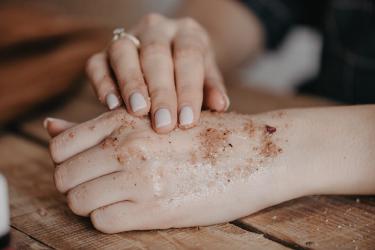
My grandmother had what she called “princess skin. " Not the fairy-tale kind-the kind that threw a fit at the slightest provocation. Wool sweaters - instant redness. New soap - burning sensation for days. She spent decades figuring out what worked, mostly through painful trial and error.
I inherited that skin - lucky me.
But but: we live in a time when dermatologists have actually cracked the code on sensitive skin. We don’t have to guess anymore. We don’t have to suffer through endless product failures. The science is there. Teams just need to know what to look for on those ingredient labels.
The Day Everything Burned
Let me tell you about my rock-bottom moment. I was twenty-six, standing in my bathroom, face covered in what was supposed to be a “gentle, natural” face mask. Within three minutes, my skin felt like it was on fire. Actual fire. I rinsed it off frantically, but the damage was done. Red, swollen, angry skin stared back at me in the mirror for the next week.
The culprit - essential oils. Natural, yes - gentle for my skin? Absolutely not.
That was when I started really digging into what dermatologists recommend for reactive skin types. And I learned that “natural” and “gentle” aren’t the same thing at all.
What Dermatologists Actually Want You to Use
Here’s what I discovered after consulting three different dermatologists and reading more clinical studies than I care to admit.
Ceramides are the unsung heroes of sensitive skin care. They’re lipids that naturally exist in your skin barrier-making up about 50% of it, actually. When your barrier is compromised (which it often is with sensitive skin), ceramides help rebuild it. Dr. Sarah Chen, a dermatologist I spoke with in Portland, called them “the mortar between the bricks of your skin cells. " Products with ceramides don’t sting. They don’t irritate - they just… work.
Centella Asiatica (also called cica or tiger grass) has been used in traditional medicine for centuries, but dermatologists have only recently started championing it in the West. It’s anti-inflammatory without being sensitizing. Studies show it helps with wound healing and reducing redness. I started using a centella serum six months ago, and my baseline redness has genuinely decreased.
Niacinamide is vitamin B3, and it’s remarkably well-tolerated. Most people can use concentrations up to 10% without issues. It strengthens the skin barrier, reduces inflammation, and even helps with uneven skin tone. The research on this one is solid-we’re talking decades of clinical data.
Hyaluronic acid sounds scary because of the word “acid,” but it’s not an exfoliant. It’s a humectant that holds up to 1,000 times its weight in water. Your skin already produces it naturally. Adding more through skincare just helps maintain hydration, which is key for sensitive skin types. Dehydrated sensitive skin is even more reactive sensitive skin.
Aloe vera is one of those ingredients that actually lives up to its gentle reputation. It’s soothing, hydrating, and has anti-inflammatory properties. My grandmother was right about this one-she kept an aloe plant on her windowsill and would break off leaves to soothe irritated skin.
The Ingredients I Now Avoid Like Plague
This list was harder to compile because it meant admitting how many products I’d wasted money on.
Fragrance is the big one. And I mean all fragrance-synthetic and natural. Essential oils fall into this category too. Lavender oil, tea tree oil, peppermint oil, rose oil. They might smell lovely. They might be “clean” and “botanical. " But they’re common irritants - my burning mask incident? Loaded with essential oils.
Alcohol denat (denatured alcohol) strips your skin barrier. SD alcohol and isopropyl alcohol are similar offenders. They make products feel lightweight and dry down quickly, but they’re not doing your sensitive skin any favors.
Sodium lauryl sulfate (SLS) is a harsh surfactant found in many cleansers. It’s effective at removing oil and dirt, but it’s also effective at irritating sensitive skin. I switched to sulfate-free cleansers three years ago and haven’t looked back.
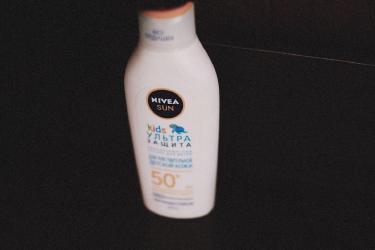
Chemical sunscreens like oxybenzone and avobenzone can cause reactions in some sensitive skin types. Mineral sunscreens with zinc oxide or titanium dioxide tend to be better tolerated. They sit on top of the skin rather than absorbing into it.
Building a Routine That Doesn’t Fight You
The dermatologists I consulted all said the same thing: fewer products, simpler formulas.
My current routine has four steps. That’s it.
Morning: gentle cleanser, niacinamide serum, moisturizer with ceramides, mineral sunscreen. Night: same cleanser, centella serum, same moisturizer. Sometimes I skip the serums entirely. My skin doesn’t punish me for it.
Compare this to the twelve-step routines I used to attempt. The layering of actives - the double cleansing. The essences and ampoules and sleeping masks. My skin was constantly overwhelmed.
What I Wish I’d Known Earlier
Patch testing is annoying but necessary. Every single new product gets dabbed behind my ear for 48 hours before it goes on my face. This has saved me from at least a dozen disasters.
Ingredient lists are your friend. The first five ingredients make up the bulk of the formula. If fragrance or alcohol appears in that first five, I put the product back on the shelf.
“Dermatologist-tested” on a label means almost nothing. It just means a dermatologist looked at the product at some point. “Dermatologist-recommended” or “clinically tested on sensitive skin” carries slightly more weight, but I still check the ingredients myself.
Your skin’s sensitivity can change. Hormones, stress, climate, medications-all of these affect reactivity. The routine that works in winter might need adjustment in summer. The products that were fine before pregnancy might not be fine during. Stay flexible.
The Turning Point
Six months into my simplified, dermatologist-approved routine, something shifted. I woke up one morning, looked in the mirror, and realized I couldn’t remember the last time my skin had freaked out. No random redness - no burning. No bumps from a product that “should” have been fine.
My grandmother passed away a few years ago, but I think about her often when I’m doing my skincare routine. She would have loved knowing that there’s actual science now behind what works for princess skin. She wouldn’t have had to spend decades figuring it out through pain.
For those of you reading this with faces that protest at everything-I get it. I really do - but there’s hope. The ingredients that actually work for us aren’t exotic or complicated. Ceramides - centella. Niacinamide - hyaluronic acid. Simple, studied, proven.
Your skin doesn’t have to be at war with you. It took me years to learn that, but now I know: the right ingredients make all the difference.